Let me be honest with you. My first lasagna was a disaster.
The noodles were mushy, the meat sauce was watery, and the whole thing basically slid apart the second I cut into it. I served it at a dinner party. In front of guests. It was humbling.
That was about twelve years ago. Since then, I’ve made this easy lasagna recipe well over fifty times — tweaking, testing, adjusting — until I landed on a version that comes out perfectly every single time. No soggy layers, no dry edges, no guesswork.
This is the recipe my neighbors text me about after they taste it. The one my kids request for every birthday dinner. The one I meal-prep on Sundays and eat happily all week.
If you’re a busy parent, a beginner cook who’s nervous about “complicated” Italian food, or just someone who wants a reliable, crowd-pleasing dinner without spending three hours in the kitchen — this is your recipe.
Let’s get into it.
Why This Easy Lasagna Recipe Actually Works
A lot of lasagna recipes online look great in photos but let you down in real life. Here’s what makes this one different.
1. You Don’t Boil the Noodles First (Seriously)
This feels wrong. It sounds wrong. But it works brilliantly.
Regular dried lasagna noodles — not the “oven-ready” kind — absorb moisture from the sauce as the lasagna bakes. This means you skip a tedious, messy step and the noodles come out with a perfectly tender, almost silky texture. The key is making sure your sauce has enough liquid content, which we account for in the recipe.
2. The Meat Sauce Cooks Down Properly
A lot of home cooks rush the sauce. Don’t.
Simmering the meat sauce for at least 20 minutes concentrates the flavors and — this is crucial — cooks off excess liquid. A watery sauce is the number one cause of a soupy, falling-apart lasagna. Patience here pays off visually and texturally.
3. The Ricotta Mixture Gets an Egg
Some recipes skip this. That’s a mistake.
One egg mixed into your ricotta acts as a binder. Without it, the ricotta layer stays loose and wet. With it, it sets up into a creamy, stable layer that holds its shape when you slice through it. You’ll notice the difference immediately when you plate it.
4. We Cover It, Then Uncover It
This two-stage baking method is a game changer.
Covering the dish with foil for the first part of baking traps steam, which finishes cooking the noodles without drying anything out. Then you remove the foil for the last 15 minutes to get that deeply golden, bubbly, slightly crispy cheese top. That’s the part everyone fights over.
5. It Rests Before Cutting
I know. The smell coming out of your oven will make this feel impossible.
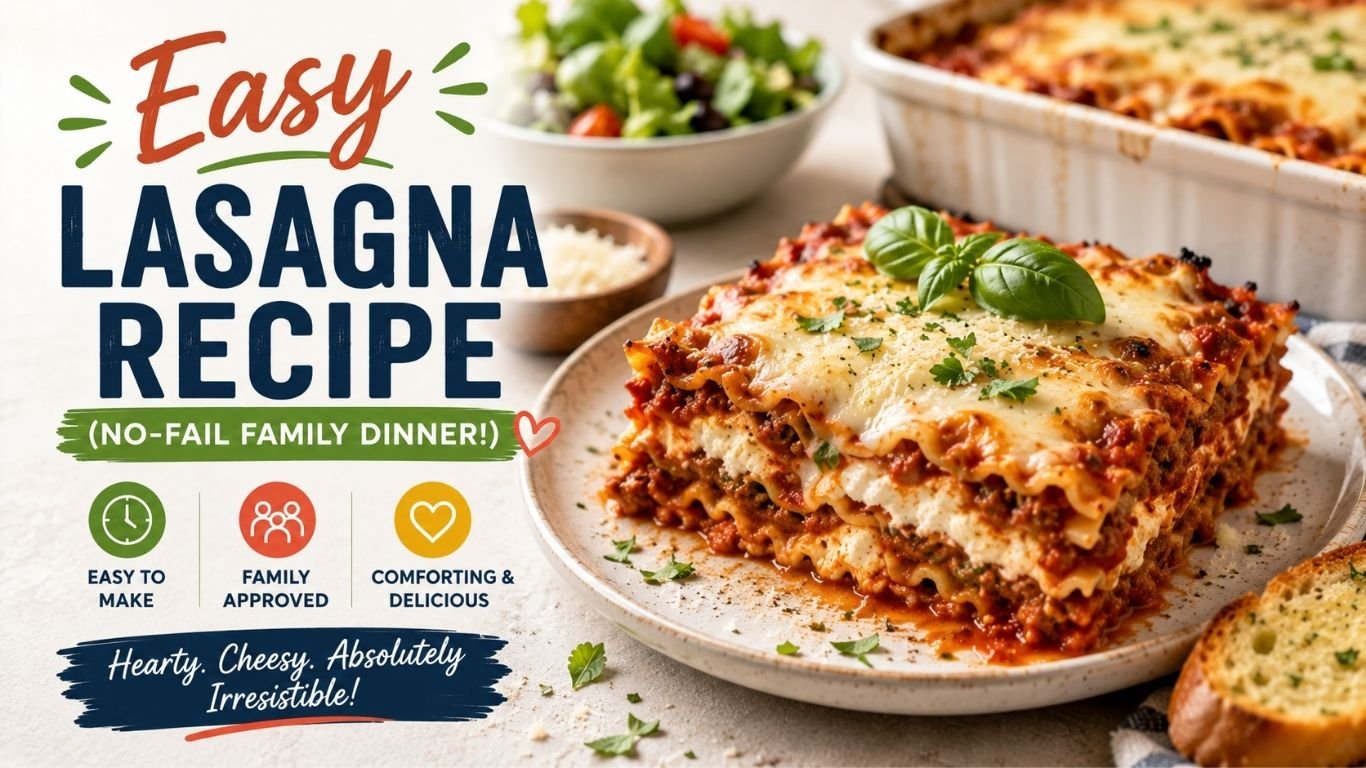
But letting the lasagna rest for 15 minutes after baking allows the layers to settle and firm up. Cut it too soon and you’ll get a sloppy mess. Wait it out and you get those beautiful, defined, Instagram-worthy slices. Worth every painful second.
Key Ingredients & Smart Substitutions
Ground beef (1 lb / 450g): The classic base for the meat sauce. Substitute with ground turkey for a lighter version, Italian sausage for more depth of flavor, or a mix of both.
Crushed tomatoes (28 oz / 800g can): Use a good-quality brand — it makes a real difference. San Marzano tomatoes are worth the extra dollar.
Tomato paste (2 tbsp): Adds richness and umami depth to the sauce. Don’t skip it.
Ricotta cheese (15 oz / 425g): The creamy, pillowy layer that holds everything together. Substitute with cottage cheese (blended smooth) for a slightly lighter option.
Whole milk mozzarella: Shred it yourself. Pre-shredded mozzarella contains anti-caking agents that prevent it from melting properly. This is one of those small things that makes a big difference.
Parmesan cheese (½ cup / 50g, grated): Mixed into the ricotta layer and sprinkled on top. Adds a sharp, salty complexity.
Dried lasagna noodles (12 sheets): Regular, not oven-ready. We’re using the no-boil technique.
One large egg: Your ricotta binder. Don’t skip this.
Fresh garlic (4 cloves): That sharp, almost sweet smell when it hits a hot pan with olive oil? That’s the smell of a great sauce starting.
Dried Italian seasoning, salt, and black pepper: Simple, but they do the work.
Dairy-free? Use a cashew-based ricotta and vegan mozzarella — it actually bakes up beautifully. Gluten-free? Swap in your favorite GF lasagna noodles and add an extra ½ cup of sauce to compensate for slightly less moisture absorption.
How to Make Easy Lasagna: Step-by-Step
Step 1: Build Your Meat Sauce
Heat a drizzle of olive oil in a large, heavy-bottomed skillet or Dutch oven over medium-high heat. Add your ground beef and break it apart with a spoon. Let it get some color — don’t just grey it out. You want a bit of a sear happening.
What to look for: Browned edges on the meat before you start stirring it.
Common mistake: Stirring the meat constantly. Let it sit, get some color, then break it up.
Once browned, drain excess fat. Add minced garlic and cook for about 60 seconds — the moment it turns fragrant and slightly golden, add your tomato paste. Stir it into the meat for about 1 minute. Then pour in the crushed tomatoes, add Italian seasoning, salt, and pepper. Stir everything together and let it simmer — uncovered — for 20 minutes.
Chef’s Note: If your sauce smells acidic or sharp, add a pinch of sugar. It rounds everything out without making it sweet.
Step 2: Make the Ricotta Mixture
In a bowl, combine ricotta, the egg, grated Parmesan, a pinch of salt, and a few cracks of black pepper. Stir until smooth.
What to look for: A creamy, uniform mixture with no visible egg streaks.
Common mistake: Using cold ricotta straight from the fridge. Let it sit at room temperature for 10 minutes first — it mixes more smoothly and bakes more evenly.
Step 3: Layer the Lasagna
Preheat your oven to 375°F (190°C).
Spread a thin layer of meat sauce on the bottom of a 9×13 inch (23×33 cm) baking dish. This prevents the bottom noodles from sticking.
Then layer in this order:
- Dry noodles (slightly overlapping is fine)
- Ricotta mixture (spread it gently — it doesn’t need to be perfectly even)
- Meat sauce
- Shredded mozzarella
Repeat for three full layers, then finish with a final layer of noodles, remaining meat sauce, and a generous blanket of mozzarella and Parmesan on top.
What to look for: Even coverage on each layer. You don’t need perfection here — it’ll all melt together.
Common mistake: Placing noodles right to the edge of the dish. Leave a tiny border so the sauce can bubble up and around without spilling.
Chef’s Note: Make sure every noodle is in contact with moisture — either sauce above it or below it. Dry exposed noodle edges turn crunchy and chewy.
Step 4: Bake It
Cover the baking dish tightly with aluminum foil (spray the underside with a little cooking spray so it doesn’t stick to the cheese). Bake covered at 375°F for 45 minutes.
Then remove the foil and bake for another 15 minutes until the top is deeply golden and you can see the edges bubbling enthusiastically.
What to look for: Golden-brown cheese on top with slightly crispy edges. That’s your cue.
Step 5: Rest, Then Slice
Pull it out of the oven. Take a moment to appreciate what you’ve made. Now wait 15 minutes.
Set a timer. Walk away. The lasagna will thank you.
Troubleshooting & FAQs
Q: My lasagna came out watery. What happened?
Almost always, this is an undersimmered sauce. The tomatoes release a lot of liquid, and if you don’t cook it down for at least 20 minutes, that liquid has nowhere to go but pool at the bottom of your dish. Next time, simmer longer and make sure the sauce is thick and coating a spoon before layering.
Q: The noodles are still hard/chewy in the middle. Help!
The sauce wasn’t wet enough to steam-cook them. Make sure you have generous sauce coverage on every layer — especially the top. You can also add 2-3 tablespoons of water around the edges of the dish before covering with foil.
Q: Can I make this ahead of time?
Absolutely, and it might actually taste better the next day. Assemble completely, cover tightly, and refrigerate for up to 24 hours before baking. Add 10-15 extra minutes to the covered baking time since it’s going in cold.
Q: Can I freeze lasagna?
Yes. Freeze it either unbaked or fully baked. Wrap tightly in plastic wrap and then foil. It keeps well for up to 3 months. Thaw overnight in the fridge before baking or reheating.
Storage, Reheating & Meal Prep Tips
Fridge: Store leftover lasagna in an airtight container or tightly covered in the baking dish for up to 5 days.
Reheating (oven): Place a slice or two in an oven-safe dish, add a small splash of water (about 1 tablespoon), cover with foil, and reheat at 350°F (175°C) for 20-25 minutes. This keeps it moist and prevents the cheese from getting rubbery.
Reheating (microwave): Cover with a damp paper towel and microwave in 90-second intervals until heated through. Not as good as the oven method, but perfectly fine for a weekday lunch.
Meal prep tip: This recipe doubles beautifully. Make two pans — eat one now, freeze one for a night when cooking feels impossible. Your future self will genuinely be grateful.