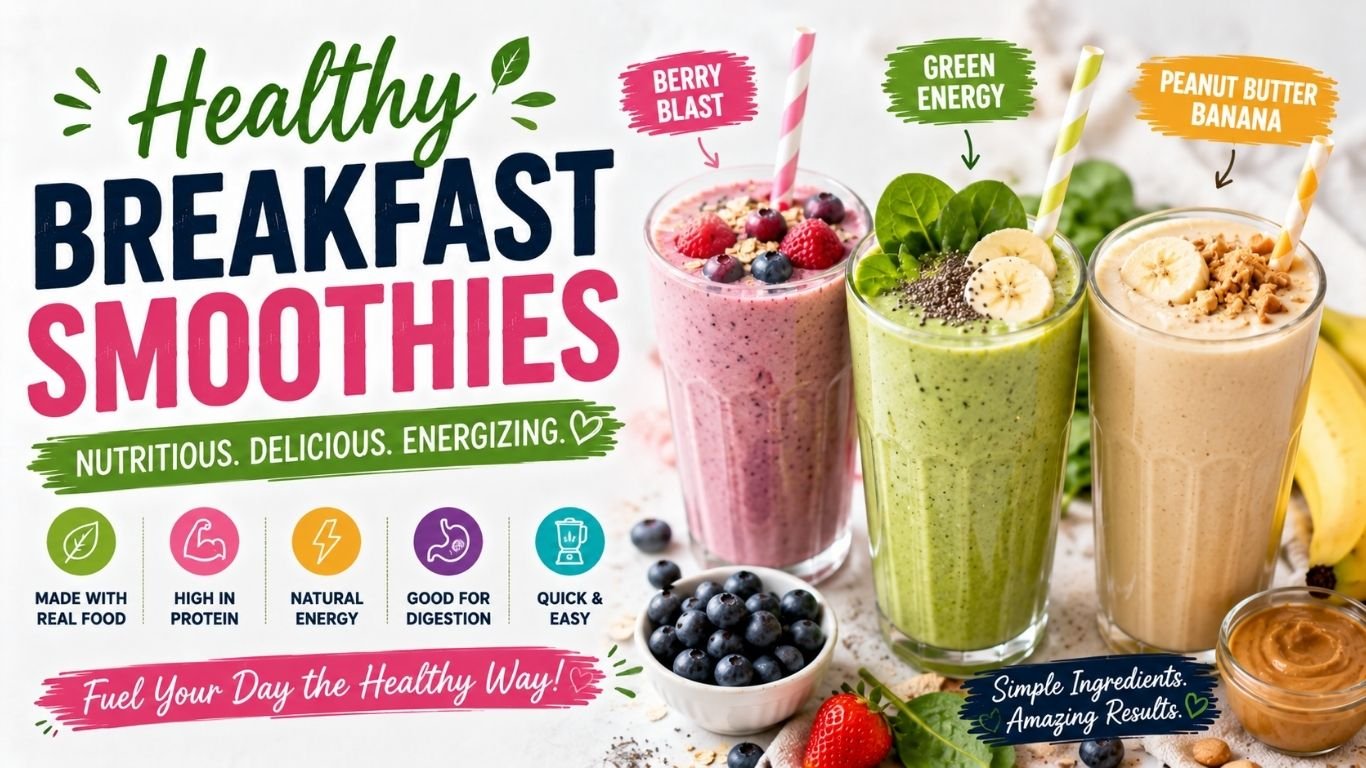
I used to think breakfast smoothies were just… cold, watery fruit drinks that left me starving by 9:30 AM. I’d gulp one down, feel virtuous for approximately 45 minutes, then raid the office snack drawer like my life depended on it.
Then I figured out what I was doing wrong. Spoiler: it wasn’t the fruit.
Healthy breakfast smoothies — real ones — are genuinely filling, take under five minutes, and can carry you through a busy morning without a single snack break. The trick is understanding the formula behind them, not just throwing random things into a blender and hoping for the best.
These recipes are for you if you’re always rushing out the door, trying to eat better without giving up flavor, or just completely over scrambling eggs at 6 AM. Whether you’re into something creamy and tropical or thick, chocolatey, and protein-packed — there’s something here for you.
Let’s get into it.
Why These Smoothies Actually Work (And Most Others Don’t)
Most smoothie recipes you find online are basically dessert in a glass. Heavy on the mango, light on the substance. Here’s what makes these different.
1. They’re Built on a Satiety Framework
Every recipe here follows a simple rule: protein + healthy fat + fiber + complex carb. That combination slows digestion, stabilizes blood sugar, and keeps hunger at bay for 3–4 hours. Skip one of those pillars and the whole thing falls apart — literally and figuratively.
2. Liquid Choice is Everything
Water makes a thin, sad smoothie. Unsweetened almond milk adds creaminess without spiking calories. Full-fat coconut milk brings a richness that transforms a fruit blend into something that feels indulgent. The liquid you choose changes the entire texture and satiety profile of the drink.
3. Frozen Fruit Over Fresh (Most of the Time)
Fresh fruit is beautiful. It’s also what gives you a lukewarm smoothie that separates by the time you reach the car. Frozen fruit chills the blend instantly and creates that thick, almost soft-serve texture that makes a smoothie genuinely enjoyable to drink. I almost always keep frozen bananas and berries on hand specifically for this.
4. Don’t Skip the Fat
I resisted adding nut butter to smoothies for years. Felt like too many calories. But a tablespoon of almond butter or half an avocado? That’s what keeps you full. Fat slows gastric emptying — meaning your stomach holds onto the contents longer. That’s a good thing in the morning.
5. Ice is the Enemy of Flavor
Adding ice dilutes everything. Flavor, color, creaminess — ice kills all of it. If you want a colder smoothie, freeze your banana ahead of time or use frozen fruit as your entire cold source. The difference in texture is dramatic.
Key Ingredients & Smart Substitutions
Here’s what you’ll see across these recipes and exactly why each one earns its place in the blender.
Frozen banana — Creates that creamy, milkshake-like base without any dairy. Substitute: frozen mango for a tropical spin, or frozen cauliflower florets if you want to cut sweetness entirely (yes, really — it works).
Greek yogurt — Adds protein and a pleasant tang. Substitute: dairy-free coconut yogurt for a vegan option, or silken tofu for a neutral, high-protein alternative.
Spinach or kale — Packs in iron and vitamins with almost no flavor impact in the right ratios. Substitute: frozen zucchini if you’re genuinely greens-averse — you won’t taste it.
Almond butter or peanut butter — Healthy fat, protein, and flavor all in one spoonful. Substitute: sunflower seed butter for a nut-free option.
Rolled oats — Old-fashioned oats blended raw add fiber and thickness. Substitute: certified gluten-free oats for celiac-friendly smoothies.
Chia seeds or flaxseeds — Tiny but powerful — omega-3s, fiber, and they help the smoothie hold its texture. No real substitute needed; just leave them out if you don’t have them.
Unsweetened almond milk — Low-calorie, creamy base. Substitute: oat milk (creamier, slightly sweeter), coconut milk (richer), or regular dairy milk.
Honey or maple syrup — Optional sweetener. Substitute: a couple of Medjool dates blended in for a whole-food sweetener with extra fiber.
How to Make Healthy Breakfast Smoothies: 5 Go-To Recipes
The Right Blending Order (Applies to All 5)
Before the recipes — order matters. Always add your liquid first, then soft ingredients (yogurt, nut butter), then your frozen fruit, then any leafy greens on top. This protects your blender blades and ensures everything incorporates smoothly.
Common mistake: Putting frozen fruit in first. Your blender will whine, struggle, and potentially create air pockets that prevent full blending. Liquid goes in first. Every time.
Recipe 1: Classic Strawberry Banana Protein Smoothie
Step 1: Pour 1 cup almond milk into the blender.
Look for: liquid covering the blades completely.
Step 2: Add ½ cup Greek yogurt and 1 tbsp almond butter.
Look for: everything sitting on top of the liquid before blending.
Step 3: Add 1 cup frozen strawberries and 1 frozen banana (broken into chunks).
Common mistake: Using fresh banana makes the smoothie thin and lukewarm — freeze it the night before.
Step 4: Blend on high for 45–60 seconds until completely smooth.
Look for: a thick, uniform pink color with no visible chunks.
Chef’s Note: If the smoothie is too thick to pour, add almond milk 1 tablespoon at a time — not a full splash. A little liquid goes a long way here.
Recipe 2: Green Goddess Smoothie
Step 1: Add 1 cup coconut water to your blender.
Step 2: Add ½ cup Greek yogurt, ½ avocado, and 1 tsp honey.
Step 3: Add 1 frozen banana, 1 cup frozen mango chunks, and 2 big handfuls of fresh spinach.
Common mistake: Adding too much spinach. Two handfuls is the sweet spot — more than that and the flavor starts to come through.
Step 4: Blend on high for 60 seconds. The color should be a vibrant, deep green — almost jewel-like.
Chef’s Note: The avocado here is non-negotiable. It’s what makes this smoothie feel creamy and luxurious rather than just… green water.
Recipe 3: Peanut Butter Chocolate Banana Smoothie
This one tastes like a milkshake. I’m not sorry.
Step 1: Blend 1 cup almond milk with 2 tbsp peanut butter and 1½ tbsp unsweetened cocoa powder first — just for 10 seconds — to get the cocoa fully incorporated before adding cold ingredients.
Step 2: Add 2 frozen bananas and ½ cup Greek yogurt.
Step 3: Add 2 tbsp rolled oats and 1 tbsp chia seeds.
Step 4: Blend 60 seconds until silky smooth.
Look for: A deep brown color with no cocoa streaks.
Common mistake: Skipping the pre-blend of cocoa powder — it clumps badly when it hits frozen ingredients cold.
Recipe 4: Tropical Mango Turmeric Smoothie
Anti-inflammatory, bright orange, and tastes like a vacation.
Step 1: Add 1 cup full-fat coconut milk and 1 tsp fresh grated ginger to blender.
Step 2: Add ½ tsp turmeric, a pinch of black pepper (this activates turmeric’s absorption — don’t skip it), and 1 tbsp honey.
Step 3: Add 1½ cups frozen mango and ½ frozen banana.
Step 4: Blend on high 45 seconds. Color should be a gorgeous, deep golden orange.
Chef’s Note: Black pepper with turmeric isn’t a mistake — it’s science. Piperine in black pepper increases curcumin absorption by up to 2000%. Tiny pinch, huge difference.
Recipe 5: Blueberry Oat Breakfast Smoothie
Tastes like a blueberry muffin in a glass. Thick enough to eat with a spoon if you want.
Step 1: Add 1 cup almond milk.
Step 2: Add ½ cup Greek yogurt, 1 tbsp almond butter, and 1 tsp vanilla extract.
Step 3: Add 1 cup frozen blueberries, ½ frozen banana, and ¼ cup rolled oats.
Step 4: Blend 60–75 seconds — oats need a bit more time to fully break down.
Look for: a deep purple, creamy texture with no visible oat pieces.
Common mistake: Under-blending this one. If you see tiny oat flecks, keep going another 30 seconds.
Troubleshooting & FAQs
Q: My smoothie is too thin — how do I fix it?
Add more frozen fruit (banana works best), a spoonful of Greek yogurt, or a tablespoon of oats. Blend again. Thin smoothies almost always come from too much liquid or not enough frozen content.
Q: Can I make these the night before?
Yes, with caveats. Smoothies with avocado or banana brown overnight due to oxidation. Squeeze half a lemon into the smoothie before storing, seal it tight, and give it a good shake in the morning. Green smoothies hold up best overnight. Consume within 24 hours.
Q: My smoothie tastes bitter — what happened?
Usually too much kale (stems are the culprit — remove them), too much cocoa powder, or unflavored protein powder. Add a Medjool date or half a banana to balance it out.
Q: Can I add protein powder?
Absolutely. Add it with the yogurt in Step 2 of any recipe. Use 1 scoop and reduce Greek yogurt to ¼ cup to keep the consistency right. Vanilla protein powder works with almost every recipe here.
Storage, Meal Prep & Reheating
Refrigerator: Store in a sealed mason jar for up to 24 hours. Leave about an inch of space at the top — smoothies expand slightly. Shake or re-blend briefly before drinking.
Freezer (Smoothie Packs): This is my actual favorite meal prep tip. Portion all your solid ingredients (fruit, oats, seeds, greens) into zip-lock bags and freeze them. In the morning, dump a bag into the blender, add your liquid and yogurt, and blend. Done in 90 seconds. Packs keep for up to 3 months.
Reheating: You don’t — these are cold drinks. But if you pulled a smoothie pack from the freezer, let it sit on the counter for 5 minutes before blending so you don’t strain your blender motor.